
DOT Requirements for Private & Not-For-Hire Carriers
Many businesses believe that because they aren't a for-hire trucking company, the DOT rules don't apply to them. If your business uses a truck and trailer to haul its own equipment, tools, or goods, they likely apply to you too. Call us and we'll help you figure out what's required.
Over 10,001 lbs. Used for your business across state lines, this truck and trailer requires a USDOT number. If you are only driving in your state, your state might require one too.
Do I need a DOT number if I'm not for hire?
Yes, in most cases.
"Not for hire" means you are a private carrier: a business that hauls its own property, equipment, or goods. If your business operates a commercial motor vehicle, you are a "motor carrier," even if you are only carrying your own stuff.
You need a USDOT number if your vehicle, or your vehicle and trailer together, is rated at 10,001 lbs or more and you cross state lines. Most states require one for companies that stay within the state too.
Private-property carriers we work with
The same goes for any other business running commercial vehicles. Not sure if that's you? Contact us and we'll help you figure it out.
Private carrier vs. for-hire carrier
For-Hire Carrier
Gets paid to transport other people's property or passengers. The transportation is the business.
Private Carrier
Transports its own property as part of a business. The transportation itself is not the business.
Being a private carrier does not exempt you from the safety regulations.
There are requirements a for-hire carrier has to follow that don't apply to you, like an MC number. The DOT number and many of the Federal Motor Carrier Safety Regulations still do.
Do the DOT rules apply to your business?
To know if you need a USDOT number, ask yourself two questions first.
Do you operate in interstate commerce?
Driving from a job in Texas to one in Oklahoma is a clear example of interstate commerce, but "interstate" does not just mean crossing state lines. You are engaged in interstate commerce if your vehicle, its contents, or its driver are part of a trip that:
- Begins in another state
- Ends in another state
- Passes through another state
A good rule of thumb is that if your business activities in any way involve crossing state lines, the answer to this question is yes.
Does your vehicle meet the weight threshold?
A USDOT number is required if your vehicle, or combination of vehicles, meets any of the following:
- Has a GVWR or GCWR of 10,001 lbs or more
- Is designed or used to transport 9 or more passengers (including the driver) for compensation
- Is designed or used to transport 16 or more passengers (including the driver), not for compensation
- Transports hazardous materials in a quantity that requires a placard
GVWR/GCWR is how much your truck, trailer, and load are capable of weighing, even if you never reach that weight.
Most states have adopted the federal regulations
The federal rules apply to interstate commerce, but nearly every state has adopted the federal safety regulations, or very similar ones, for companies that stay within the state. New York, Illinois, Michigan and Minnesota all require a DOT number starting at 10,001 lbs GVWR/GCWR. Florida, New Mexico and North Carolina only require it at 26,001 lbs or more.
Find your state in our state-by-state breakdown, or call us and we'll walk you through what your state's threshold is and what regulations it has adopted.
What's required after you get a DOT number?
Getting a DOT number is just the first step. When you operate under a DOT number, you're subject to the safety regulations that apply to your vehicles, even if you stay within your home state.
- Your vehicle, or vehicle and trailer, is rated at 10,001 lbs or more
- A USDOT number displayed on the vehicle, plus a Driver Qualification File and a DOT medical card for every driver.
- You drive a CDL-required vehicle
- Drug & alcohol testing, plus an FMCSA Clearinghouse account and queries on your drivers. The 2290 Heavy Vehicle Use Tax applies at 55,000 lbs or more.
- You cross state lines
- UCR registration every year, and a biennial update.
- 26,001 lbs or more across state lines
- International Fuel Tax Agreement (IFTA), IFTA quarterly reports, and International Registration Plan (IRP).
- Your state has its own permit
- A state permit or intrastate authority. California, Texas, New York, New Mexico, Connecticut, Kentucky, and Oregon each have one.
As a private-property carrier, you don't need an MC number or a BOC-3 filing. Download the common compliance requirements PDF and find Private Property and your weight to see everything that applies.
Let TIPS handle your DOT requirements
Trucking is not the main function of your business, but it's likely a core part of it. Your dedicated compliance agent at TIPS figures out what applies, handles the paperwork, and makes sure you stay legal going forward.
- 1Call us and tell us a bit about your business, your vehicles, and where you operate.
- 2We figure out exactly which state & federal requirements apply to your company.
- 3If you don't have a DOT number yet, we file it for you. USDOT number filing is free when you don't need an MC number.
- 4We handle your driver files, drug & alcohol testing, and state permits, then track your deadlines going forward.
What companies say about working with TIPS
Bailey and the team have gone above and beyond anything we could have expected. As we start up our company, they've been genuinely eager to work with us, and not just within the scope of what they're hired to do. They've guided us through our entire process.
Scott WintersGoogle reviewSamantha made this process so easy! She handled all my concerns and was very quick with any questions or concerns I had. I will be using TIPS for all my compliance! Recommend 10 out of 5 stars!
Brian ZarlingGoogle reviewBailey and Samantha have done an awesome job for us. Even when I threw a wrench into the mix, they did miss a beat. They are very thorough, detail oriented, and go the extra mile for us. I highly recommend them and the services they provide.
William MarksGoogle reviewMore on DOT requirements for private carriers
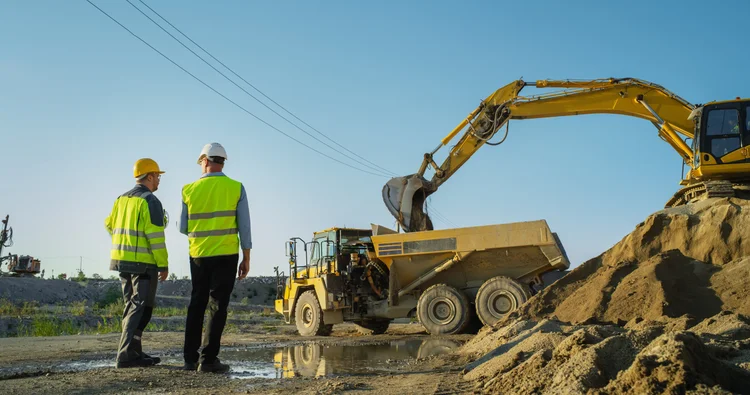 Do You Need a USDOT Number to Haul Your Own Property?The full walk-through for companies that haul their own equipment.
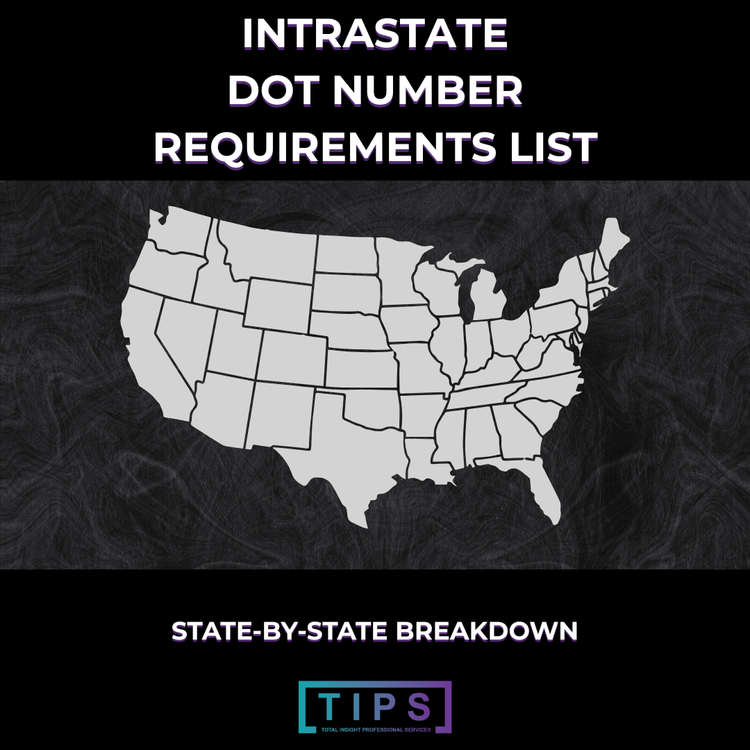 Intrastate DOT Number Requirements by StateWhat every state requires when you never cross its line.
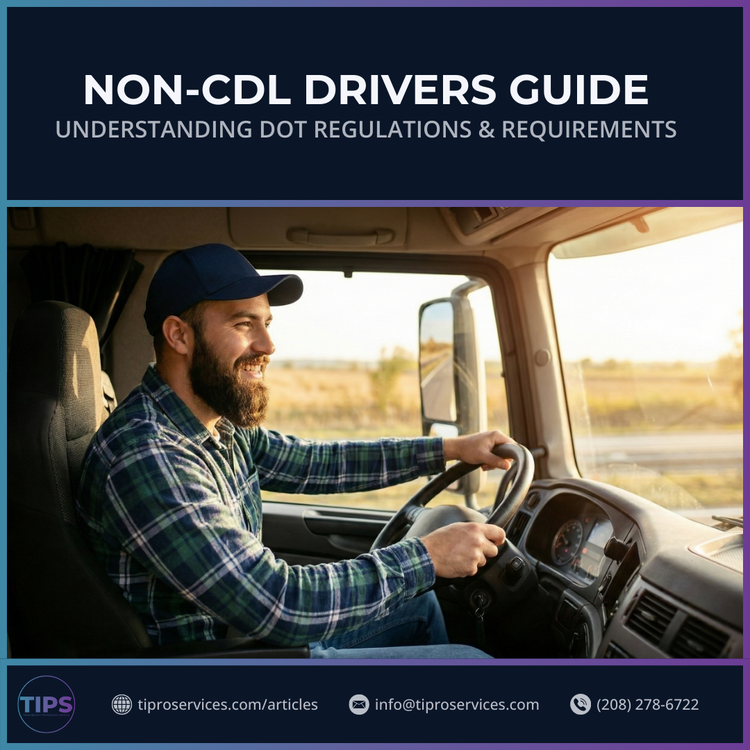 Understanding DOT Regulations for Non-CDL DriversWhat applies to drivers of vehicles that don't require a CDL.
Private carrier DOT questions
Do I need a DOT number to haul my own equipment?+
Do I need a DOT number for personal use?+
Does a pickup truck need a DOT number?+
Do landscapers need DOT numbers?+
Does "Not For Hire" on my truck mean I don't need a DOT number?+
Do private carriers need an MC number?+
Who is exempt from a DOT number?+
Does a dump truck need a DOT number?+
Where does the DOT number go on my truck?+
What happens if I operate without a DOT number?+
Looking for a specific answer? Read our DOT & FMCSA questions and answers.
Find out what applies to your company
Tell us a bit about what you do, and we'll tell you exactly what's required and how we'll handle it.