

DOT Compliance Articles and Trucking News
Plain-English guides on FMCSA rules, state permits, drug and alcohol testing, and staying road-legal, written by the TIPS compliance team. Looking for a quick answer? Start with the compliance FAQ or grab the free 2026 compliance guide.
How to Become a Freight Broker (2026/2027)
What a freight broker needs to get legal and start booking loads: an authority, a $75,000 bond, and the filings, plus what everything costs to start brokering.
How to Start a Box Truck Business: Full Checklist
The full step-by-step list to start a box truck business, and why you should price your insurance before you file for anything.
Should You Get Your Own Authority or Lease On?
The costs, the revenue split, the contract traps, and how to lease on while you age your own MC number.
How Much Does It Cost to Start a Trucking Company in 2026?
Registration, insurance, the truck, and other expenses that people miss. Realistic 2026 numbers for semis, box trucks, and hotshots and more. Everything you need to get an idea of what you’re looking to spend in your first year.
Form 2290 and the Heavy Vehicle Use Tax, Explained
Every truck at 55,000 pounds or more owes the heavy vehicle use tax by August 31. What Form 2290 costs, who has to file, and why your plates depend on the stamped Schedule 1.
Do I Need a DOT Compliance Company?
A DOT compliance company files the paperwork and tracks your deadlines. TIPS does nearly all of it in one place, for less than the other guys.
Issues With FMCSA’s MOTUS? Here’s What We Know
The rollout has caused login lockouts, failed DOT number linking, identity verification errors, and insurance and authority status that shows wrong.
What Is the Connecticut Highway Use Fee?
The Connecticut Highway Use Fee is a mileage-based tax on heavy commercial trucks. It started on January 1, 2023, and is run by the Connecticut Department of Revenue Services. The state charges it for the privilege of running certain large trucks on its public roads.
How the Oregon Weight-Mile Tax Works for Truckers
If you run trucks into or through Oregon, you will not pay the state's diesel fuel tax the way you do almost everywhere else. Oregon handles heavy trucks differently. It charges them a tax based on how much they weigh and how many miles they drive on Oregon roads. This is the Oregon weight-mile tax, and setting it up correctly is one of the first things a carrier needs to handle before running a load in the state.
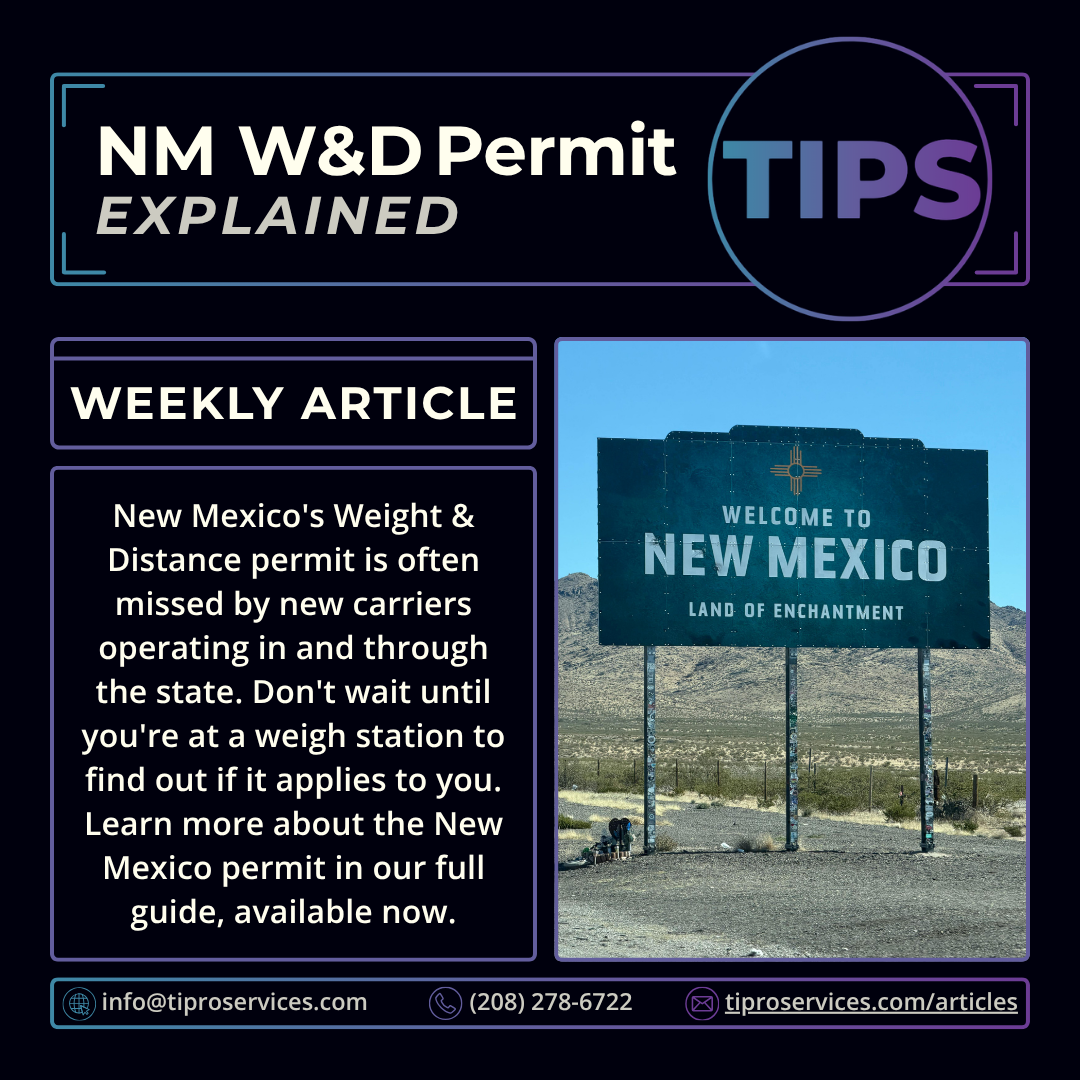
New Mexico Weight Distance Permit Requirements for Truckers
The New Mexico weight distance tax (WDT) is a road-use tax on heavy commercial trucks. New Mexico charges it based on two things: how much your vehicle weighs and how many miles you drive on New Mexico roads. The heavier the truck and the more miles you run in the state, the more you owe.
KYU Number Explained: Who Needs It and How to Get One
If you run a heavy truck through Kentucky, the state charges a tax that has nothing to do with IFTA, IRP, or your USDOT number itself. To pay it, you need a KYU number. A lot of carriers find out about it after a fine at a Kentucky weigh station.
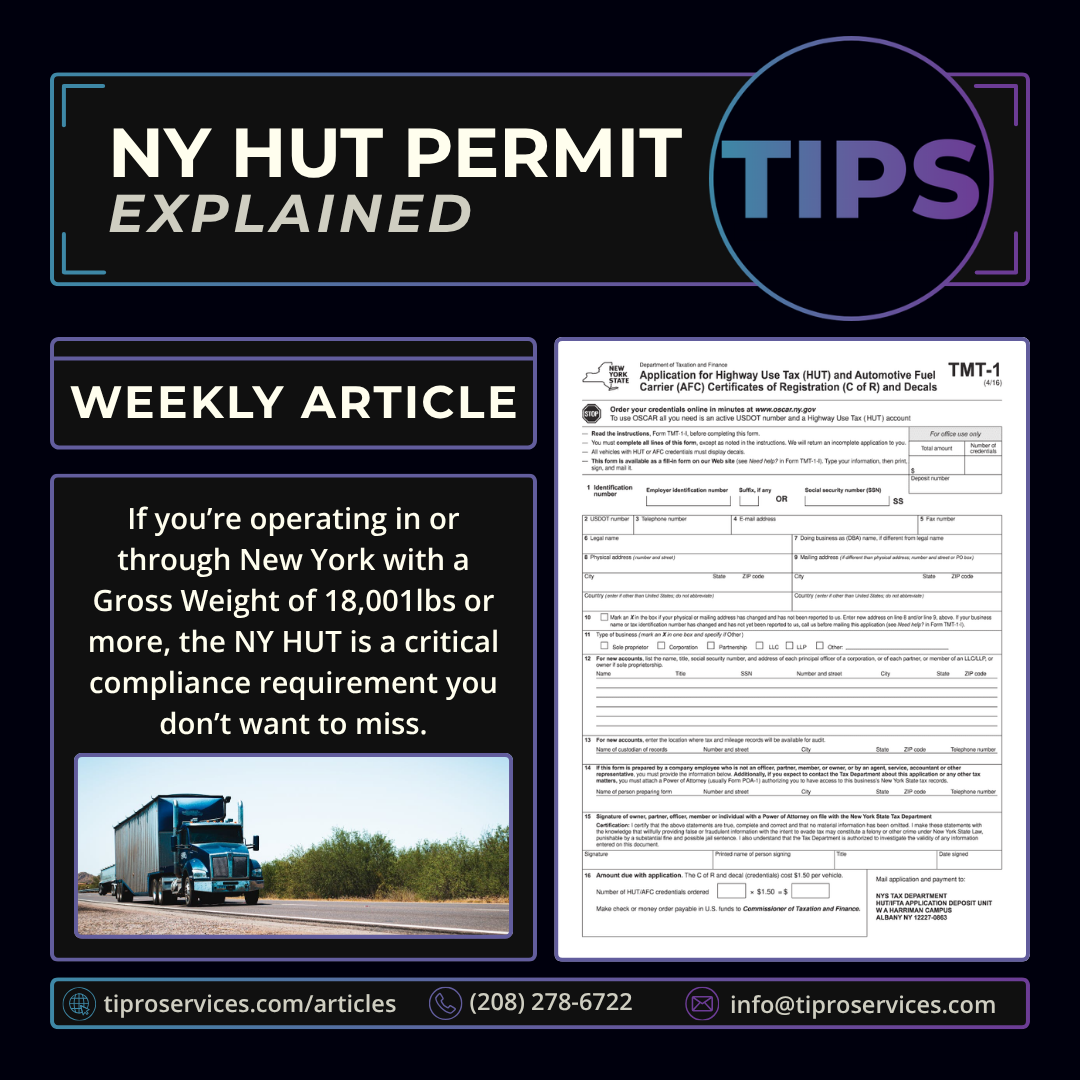
NY HUT Explained: Who Needs It and How to Get One
If you’re operating in or through New York with a Gross Weight of 18,001lbs or more, the NY HUT is a critical compliance requirement you don’t want to miss.
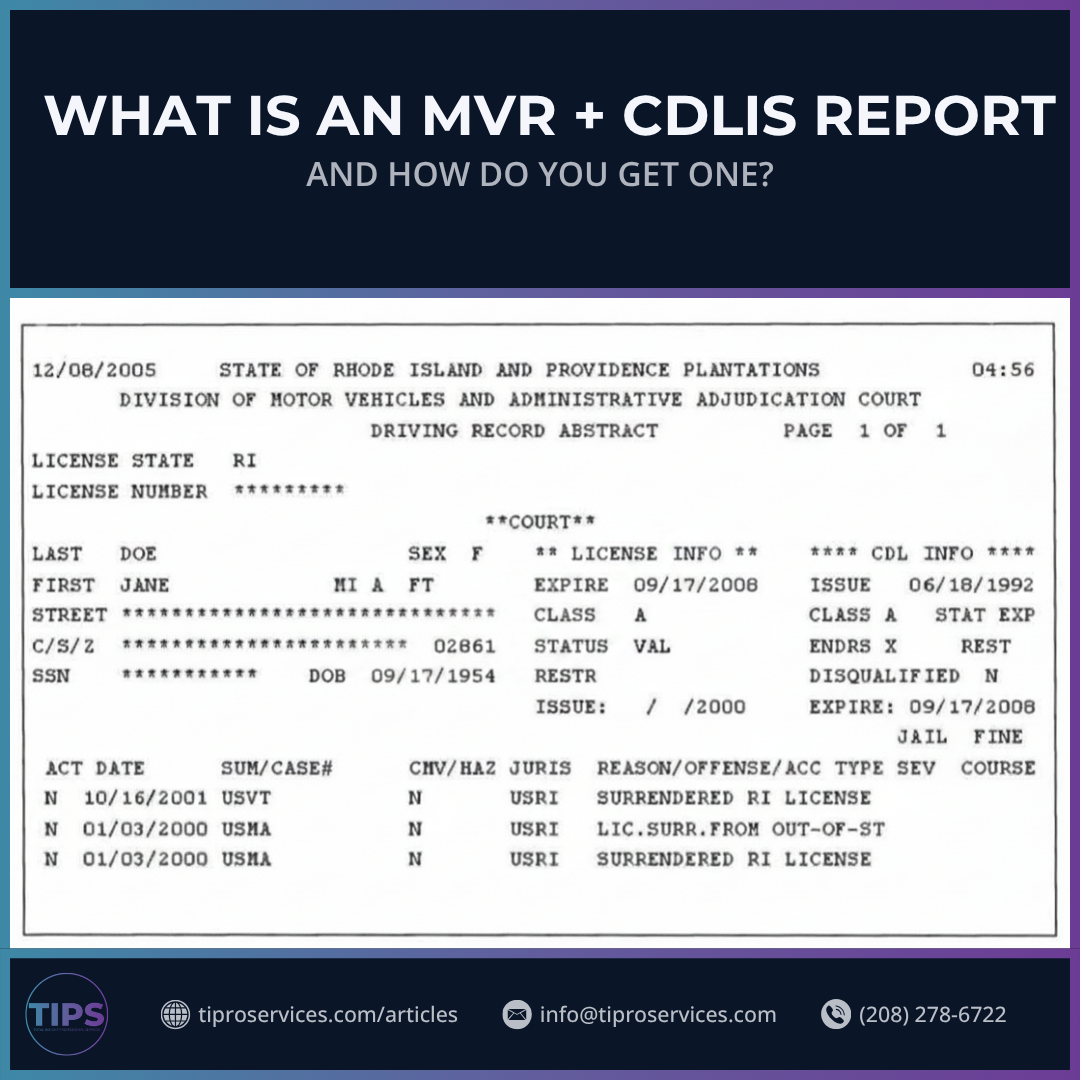
What Is an MVR + CDLIS Report and How Do You Get One?
Missing motor vehicle records are the most cited driver qualification file violation in FMCSA audits. More than 6,400 violations have been written in the past five years. If you hire commercial drivers, MVR and CDLIS reports are not optional. TIPS pulls both in 1-2 business days.
UCR: Who Needs It, What It Costs, and How to File
If your trucks cross state lines, or you work with interstate cargo you most likely need UCR. It's a federal registration that most interstate carriers have to complete every year. Brokers, freight forwarders, and leasing companies need it too. If you skip it, you can get fined or pulled out of service at a weigh station.
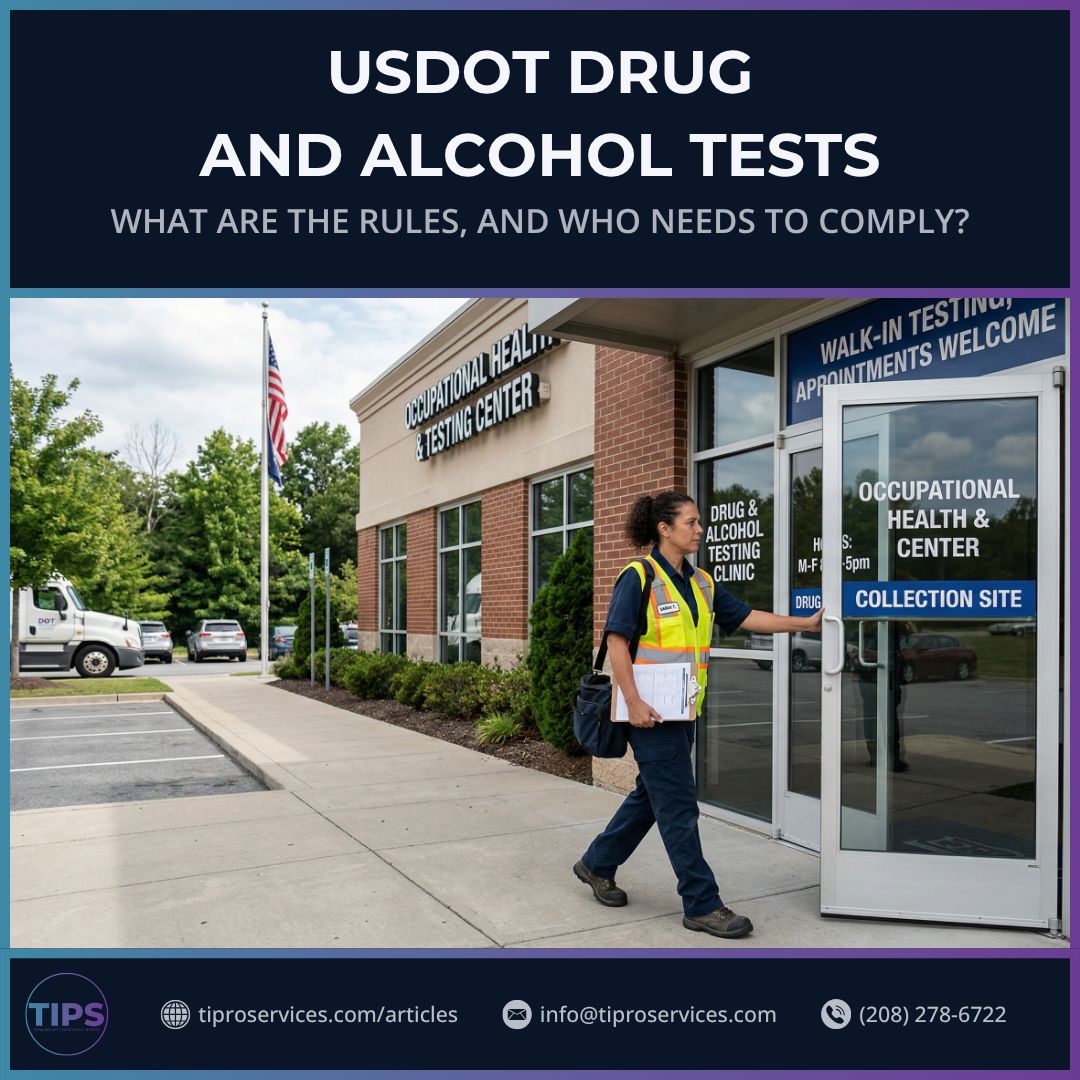
DOT Drug and Alcohol Testing: What Are the Rules, and Who Needs to Comply?
If you have a CDL and drive a commercial vehicle, you need a drug and alcohol testing program. It does not matter if you drive across state lines or stay local. It does not matter if you haul for someone else or for your own company. The rules in 49 CFR Part 382 cover every CDL driver, and all 50 states have adopted them.
What Trucking Regulations Apply to My Business?
The trucking regulations that apply to your business depend on whether you haul for others or yourself, whether you cross state lines, and how much your vehicle weighs.
Use the free Compliance Calculator from Total Insight Professional Services (TIPS) to find out what applies to your specific operation in minutes.
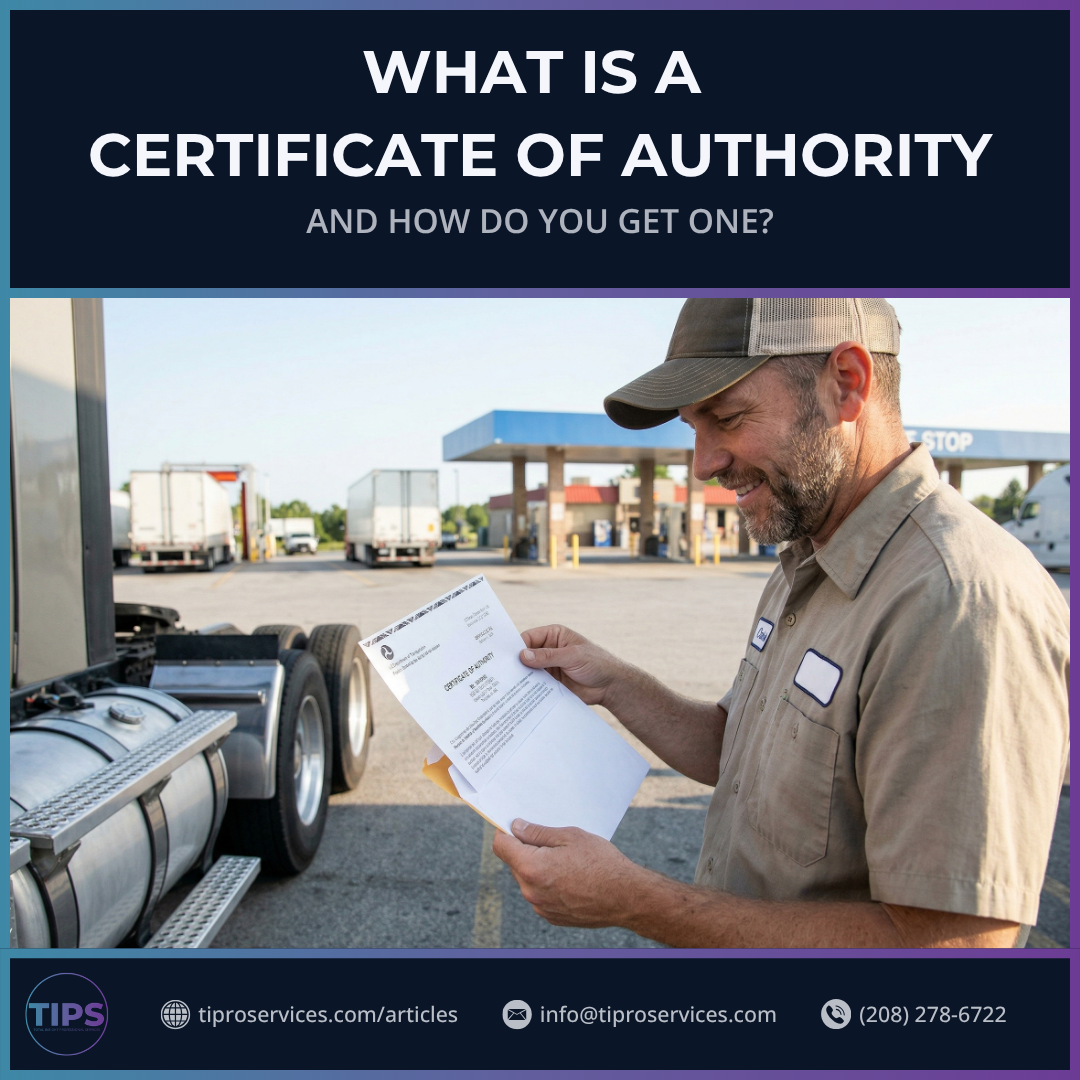
What Is a Certificate of Authority and How Do You Get One?
A certificate of authority is the official FMCSA document that proves your company has active operating authority (MC number) to haul freight for pay across state lines. If you need yours fast, TIPS can get your certificate of authority to you quickly so you can start booking loads right away.
What Is a SCAC Code? Who Needs One and How to Get It
This guide covers what a SCAC is, who needs one, how to apply, what it costs, and what changed in 2026. At TIPS, we handle SCAC applications so you can skip the paperwork and get your code fast.
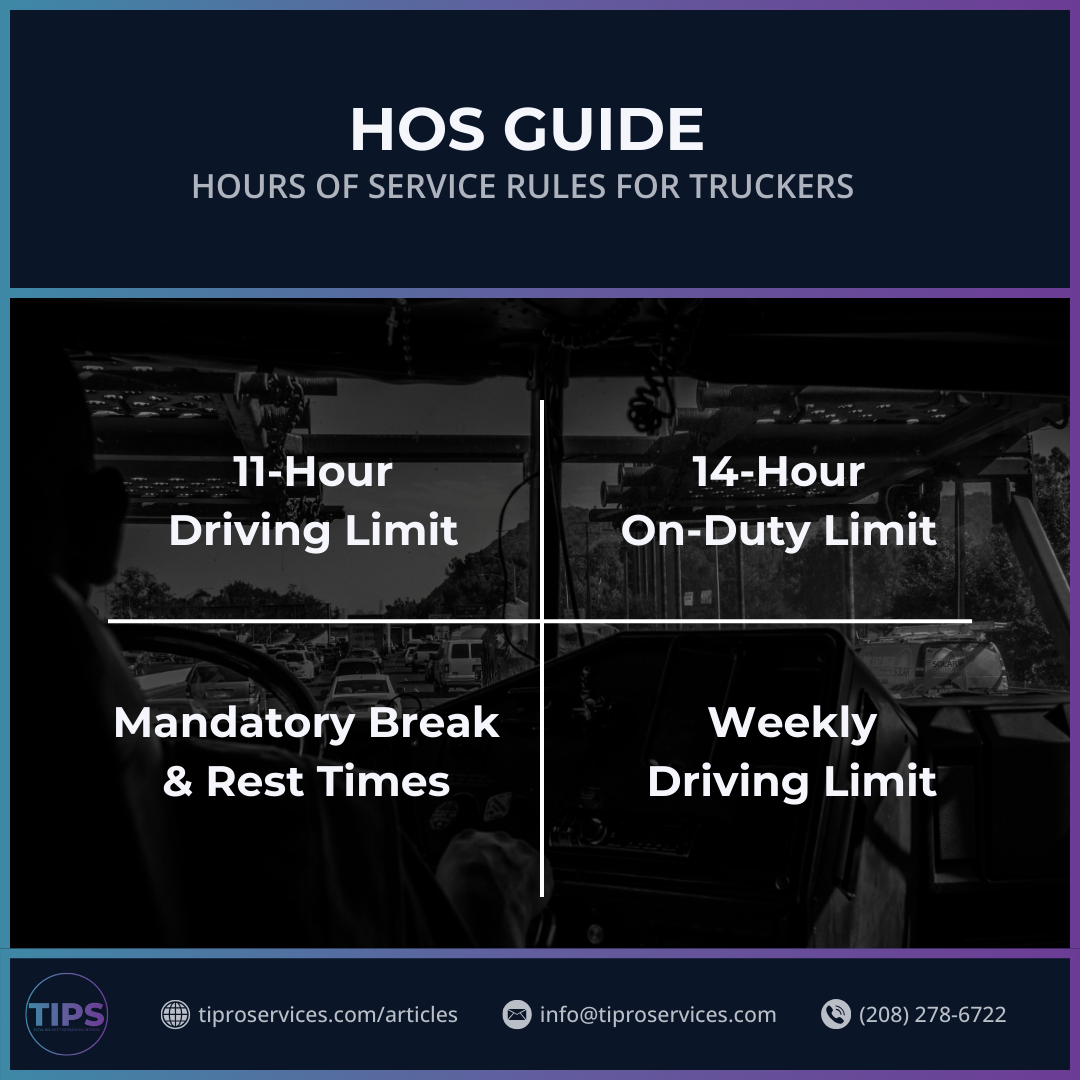
Hours of Service (HOS) Rules: What Truck Drivers Need to Know
If you drive a CMV, you need to know these hours of service regulations. Breaking them can lead to fines, out-of-service orders, and damage to your CSA score. This guide covers every major HOS rule, who they apply to, the exemptions, and what happens when you violate them.
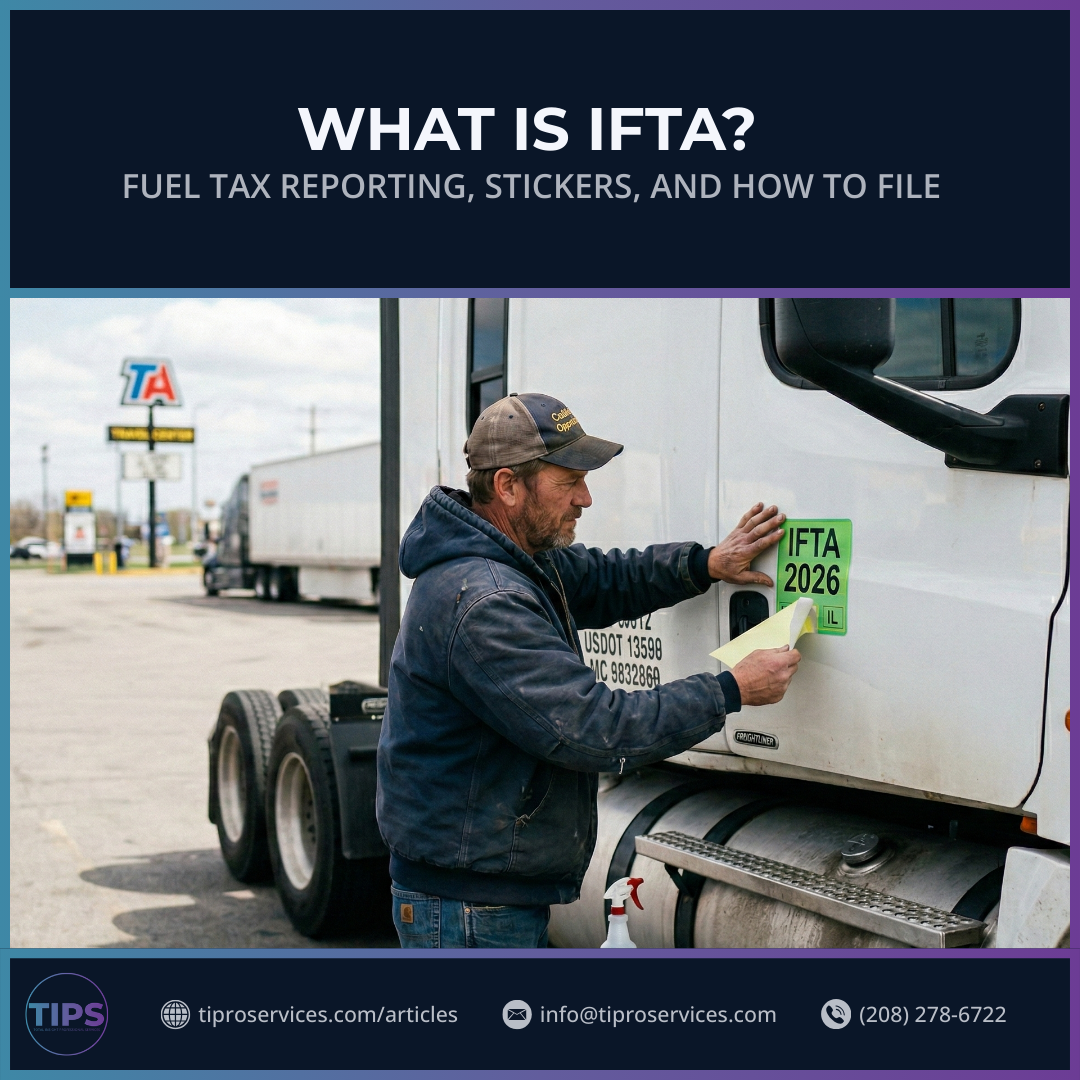
What Is IFTA? Fuel Tax Reporting, Stickers, and How to File
This article covers how IFTA works, how to get your IFTA stickers and license, how to file IFTA fuel tax returns each quarter, what it costs, and how to calculate your taxable miles.
Want all of this in one PDF?
The 2026 Motor Carrier Compliance Guide covers DOT regulations, FMCSA requirements, drug testing, ELDs, hours of service, and state permits. Free, sent straight to your inbox.