
DOT Compliance Articles and Trucking News
Guides, regulatory updates, and compliance tips for motor carriers and owner-operators. Written by the TIPS compliance team.

How to Recover After a Failed Safety Audit
Take a deep breath. You are not the first carrier to face this, and you won't be the last. The situation is serious, but it is fixable if you act immediately. The next step you need right now is creating a Corrective Action Plan (CAP).
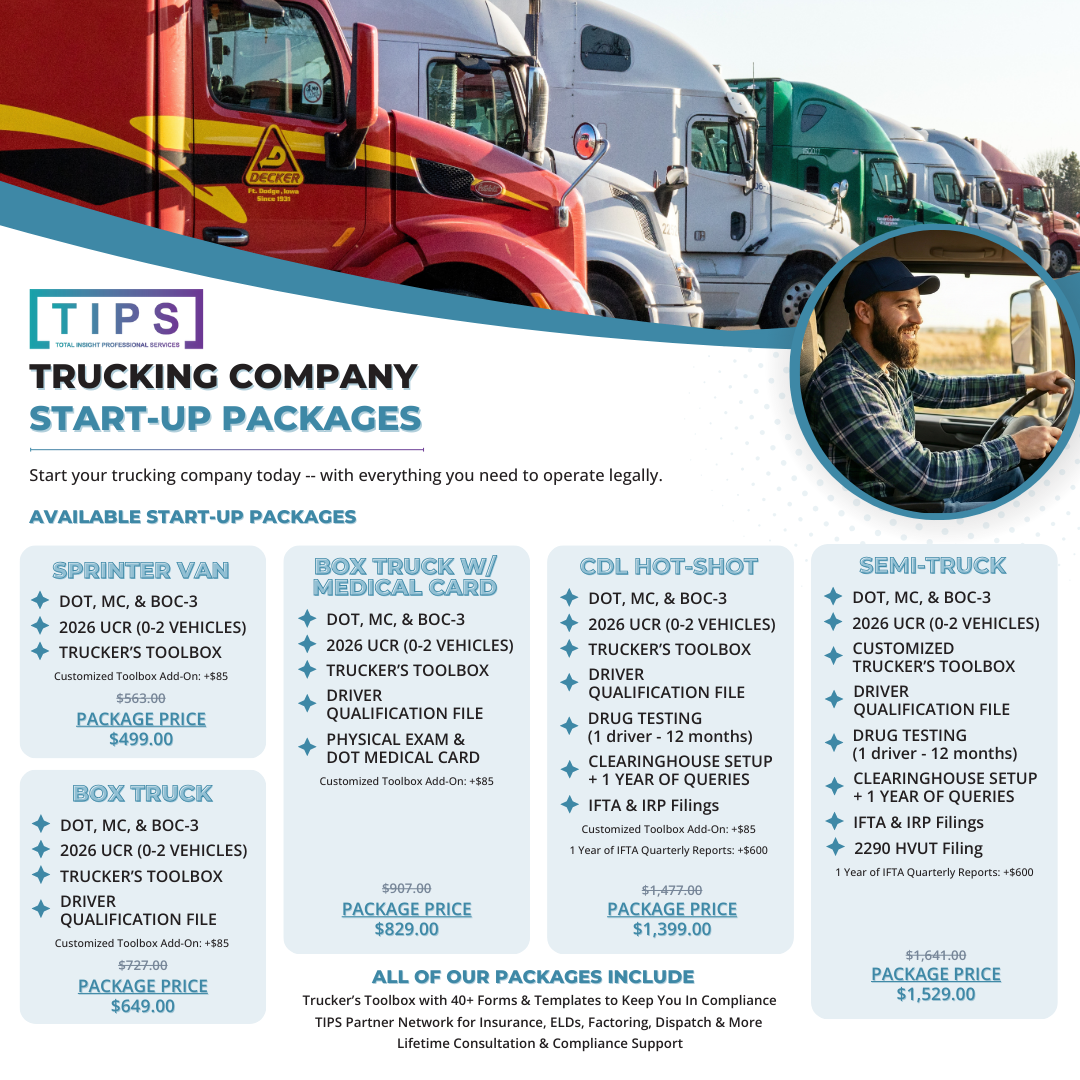
Start Your Trucking Business the Easy Way in 2026
At TIPS, we don't just tell you what to do—we do it for you. We have built new Start-Up Packages for 2026 that cover everything you need to get legal. You hand us the keys to the compliance side of your business, and we make sure you are ready to roll.
Understanding Truck Driver Background Checks & FMCSA Requirements
For many carriers, the background check process can feel like a maze of federal regulations and state rules. This article breaks down exactly what goes into a comprehensive truck driver screening, what the FMCSA requires, and how to interpret the information you find.
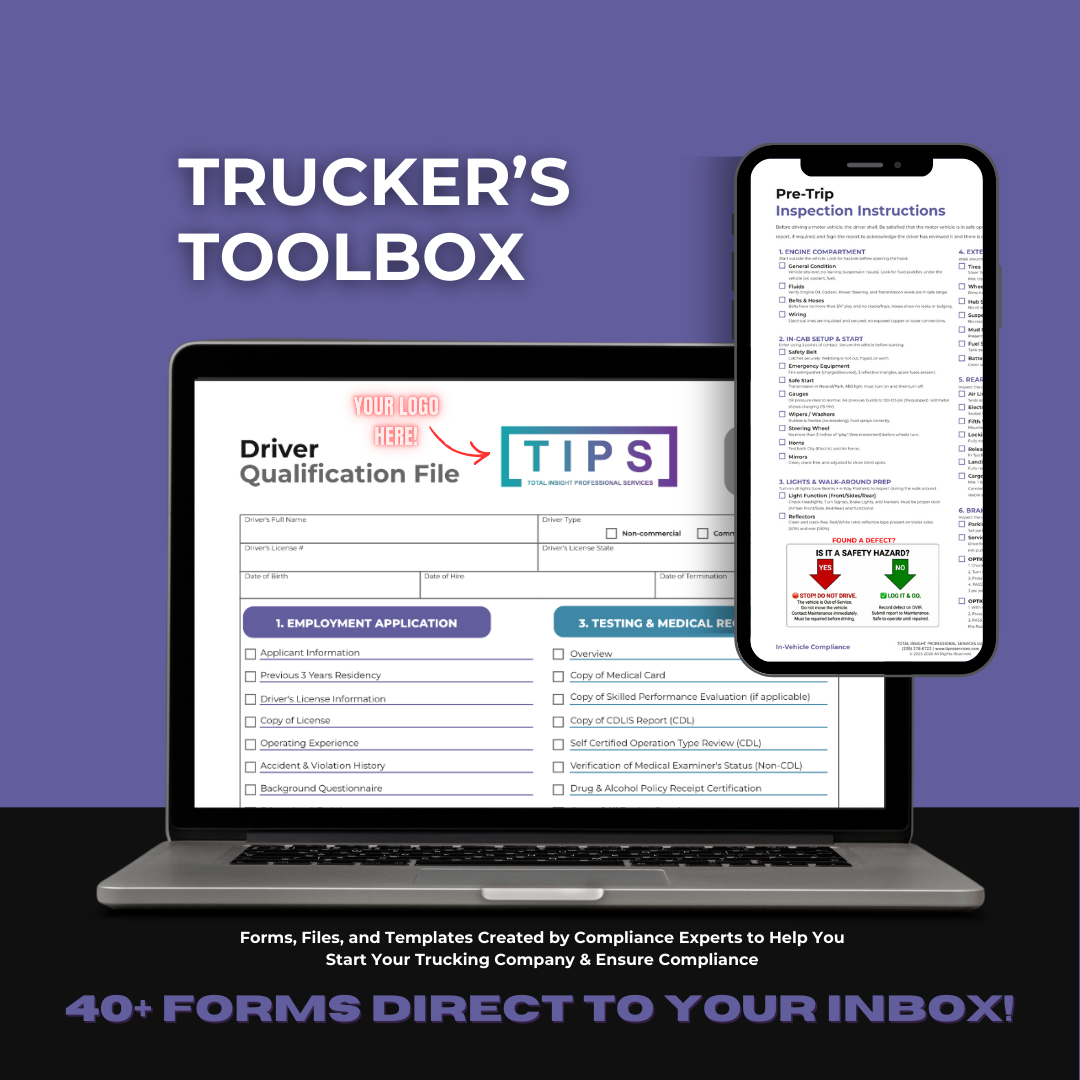
Introducing the Trucker's Toolbox: Everything A Small Fleet Needs
TIPS launches the Trucker's Toolbox! A complete bundle of 40+ FMCSA compliance forms and templates for trucking companies. Driver files, vehicle docs, and more.
Why New Carriers Fail Their Safety Audit (And How To Avoid It)
Don't lose your ability to operate to a preventable mistake. We break down the most common reasons carriers fail the New Entrant Safety Audit, why these failures occur, and what you can do to prevent it.
What is a C/TPA, and How Do I Know If I Need One?
Operating a commercial vehicle? You might be required to join a C/TPA. Learn what a Consortium/Third-Party Administrator is, if you need one, and how to spot a reliable provider.

How to Improve Your CSA Score and Lower Insurance Rates
Your CSA score is one of the few things in trucking you can directly control to lower your operating costs, reduce the chances of future audits, and provide direct evidence of your company’s safety track record. Learn what it is, why it could be costing you money, and exactly how to fix it.
What is IFTA & IRP?
If you are expanding your trucking business across state lines, or just upgraded to a vehicle combination that requires a CDL, you have likely run into two major acronyms: IFTA and IRP. Whether you are a brand new carrier, or a company that has been operating for years but just made changes to your equipment, understanding these two requirements is critical.
Next Steps After Getting a USDOT Number: New Carrier Checklist
If you recently applied for a DOT number and are wondering what you need to do now, or are planning to start a company with commercial vehicles and want to be prepared, this guide is for you.

Do Intrastate Companies Need a DOT Number?
Many companies operate under the assumption that because their vehicles don’t leave the state, they are exempt from getting a USDOT Number and any of the safety regulations that go hand-in-hand with operating under one. If you are under that assumption, there’s information in here that could prevent you from facing some significant violations.

2026 Head-Start Event: Ends November 30th, 2025
Save big on trucking compliance with our 2026 Head-Start Event! Get deals on new DOT/MC authority, IFTA filings, driver files & more. Lock in 2026 prices now. Offers end Nov. 30, 2025!
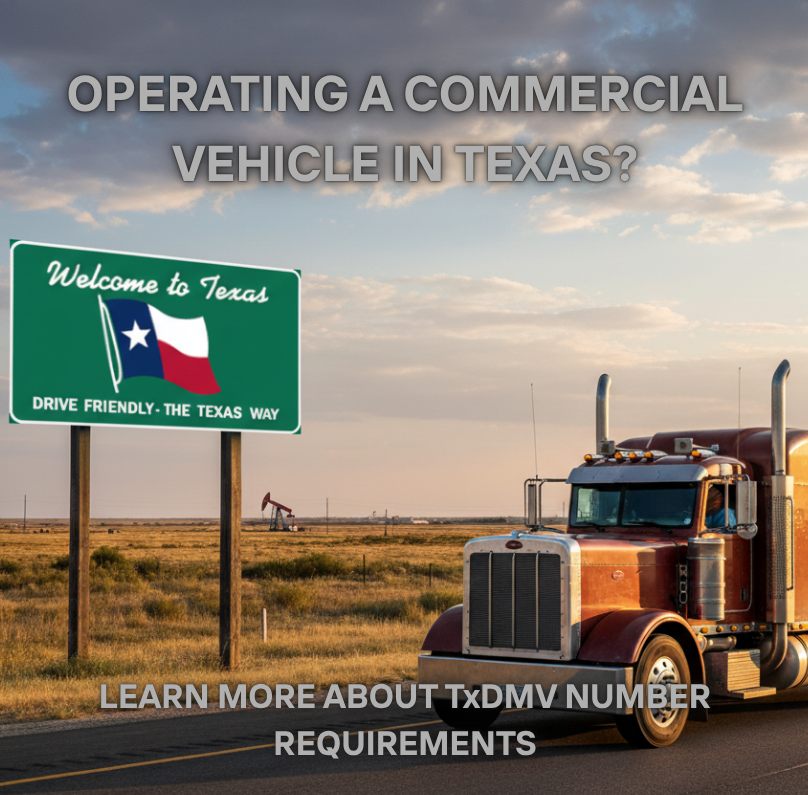
TxDMV Number: Requirements, Rules, & Registration
If you plan on operating a commercial vehicle in Texas, or you’re already on the road, you’re likely familiar with certain requirements like the USDOT number. But what about state-level rules? For many carriers, Texas requires an additional registration known as the TxDMV Number.

Do You Need a USDOT Number to Haul Your Own Property?
This is one of the most common questions we get from construction companies, landscapers, etc. The short answer is - likely, yes. Let’s break down the requirements and shed some light on a commonly misunderstood area.
CA Number & Motor Carrier Permits Explained
Operating a commercial vehicle in California comes with its own unique set of rules requirements. While you might be aware of what a USDOT number is, if you’re running routes within the Golden State, you’ll need two additional credentials to operate legally: a Carrier Identification Number (CA Number) and a Motor Carrier Permit (MCP).

FMCSA Reverses Plans to Discontinue MC Numbers
The FMCSA has reversed course on their previously announced plans to discontinue the MC Numbers in October 2025. Learn what that means for you and what the FMCSA plans to do going forward.

UCR Explained: How to Avoid Overpaying
If you hold an interstate USDOT number, you’re required to file for the Unified Carrier Registration (UCR) every year. However, if you pay a company to manage it for you, you’re paying significantly more than what it costs you to do it yourself, and you aren’t saving yourself any time or effort at all.

Everything Carriers Need to Know About ELDs
Love them or hate them, Electronic Logging Devices (ELDs) are here to stay. Obtaining and using an ELD is a crucial requirement for the majority of commercial carriers. Failing to comply means serious repercussions for your operations, so we’ve put together the most important information you need to know.

Cab Cards & IRP: What You Need to Know
For any interstate motor carrier, IRP registration and the associated cab card are critical requirements that can’t be ignored. This article breaks down what a cab card is, how it relates to the IRP, who needs it, and what you must know before putting your trucks on the road.

What is a Drug and Alcohol Consortium?
One of the most frequently cited and critical violations during a New Entrant Safety Audit is the failure to comply with 49 CFR Part 382. Learn what a Drug and Alcohol Consortium is and how to comply with this critical requirement.

Understanding the BOC-3 Filing: Critical Requirement for Operating Authorities
Learn all the ins & outs of the BOC-3 Blanket of Coverage filing for anyone who wishes to obtain an operating authority from the FMCSA. What is it, why it’s required, how to get one, and more. The only guide you’ll need.